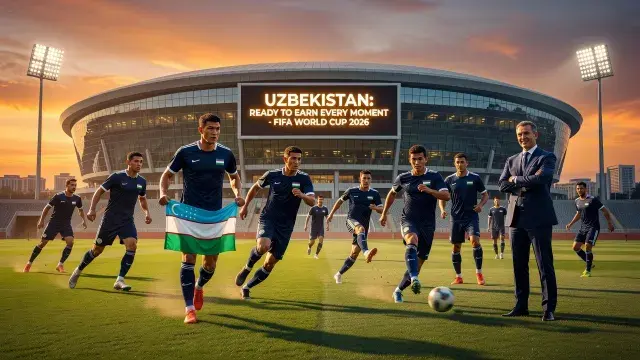
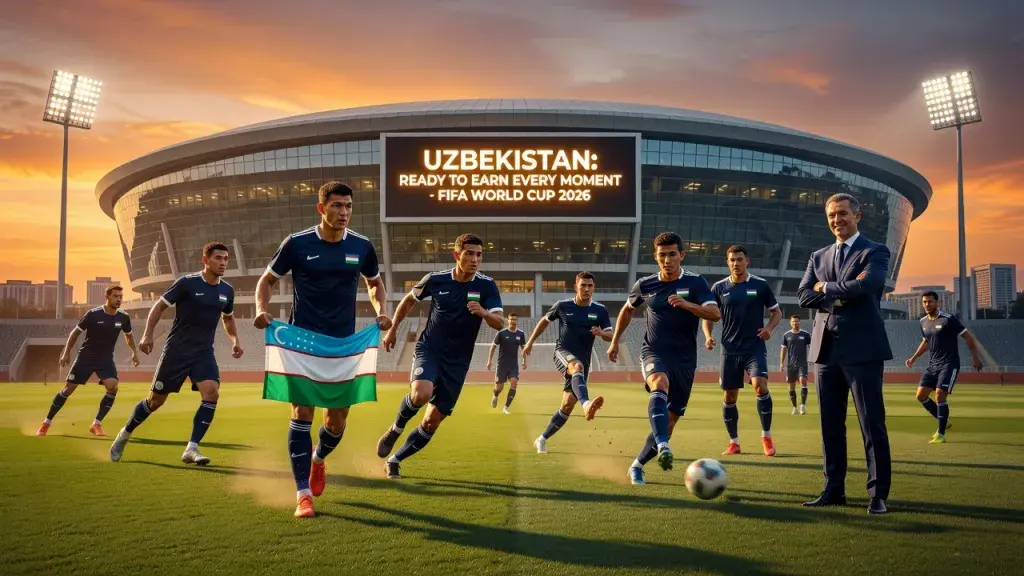
Uzbekistan's appearance at the 2026 World Cup is not a fairytale stumbled into. It is the result of a deliberate, decade-long rebuild of a football infrastructure in a country of 38 million people where the sport has long been the national obsession. The question was never whether the talent existed. It was whether the system around it was good enough to let it flourish.
The journey to this point carries the texture of the nation itself. There is a local saying in Tashkent that Yandex Maps - the navigation app of choice across Central Asia, distinct from the Google Maps familiar to Western users - is almost impossible to beat on foot, unlike its more forgiving counterparts elsewhere. You can stride out, cross roads with abandon and push your pace, and the app will still greet you at the destination on schedule or ahead of you. Much like waterpolo online betting occupies a niche where discipline and strategy matter more than raw instinct, Uzbekistan's football journey has been defined not by flair alone but by structured, hard-won progress. It is a small cultural detail, but it captures something real: in Uzbekistan, you do not cut corners. You earn your arrival. waterpolo online betting
That mentality is precisely what has brought them to the world's biggest stage, albeit later than many inside the country believe it should have happened. Uzbekistan came agonisingly close to qualifying in 2006, losing an intercontinental play-off in circumstances that remain disputed, then missed out on goal difference in 2014 and fell two points short of South Korea in 2018 after a goalless draw in their final group game. The "chokers" label attached itself to a generation and stuck. It was painful, and largely fair.
Infrastructure Was the Missing Piece
What changed? Money was invested, deliberately and at scale. Over the past decade, Uzbekistan has built a national football centre, new stadiums, academies and thousands of pitches - football facilities now exist in 70 per cent of more than 9,000 neighbourhoods across the country, aided by FIFA's Football for Schools programme. In 2017, just three Uzbekistani stadiums met FIFA's international standards. A new 55,000-capacity national stadium in Tashkent is due next year, and the country will co-host the 2027 FIFA Under-20 World Cup alongside Azerbaijan.
Crucially, coaching education was modernised. The goal was generational sustainability - not one good squad, but a pipeline. It has shown results at youth level, with Uzbekistan going deep in under-17 and under-20 competitions both globally and across Asia, and the country made its Olympic debut in 2024. "The talent has always been there but we needed structure," Akbar Yusupov, former footballer and editor of the English-language Tashkent Times, told The Athletic. "The current group have played together, aged 16, 17 onwards, with organised training camps in Europe and South America. That's why they've improved; proper preparation over a long time."
Cannavaro's Side and the Three Players Who Define Them
Italy's 2006 World Cup-winning captain Fabio Cannavaro was brought in to oversee the senior team, and he inherited a squad with a defined identity. Seven years ago, Uzbekistan adopted a centralised national team style, implemented across all age groups with input from domestic coaches: vertical passes, technical play, rapid counter-attacks and an aggressive, high-intensity press. The system is coherent and recognisable, which is a considerable advantage for a team making its World Cup debut.
Three players anchor everything. Abdukodir Khusanov, the Manchester City defender, provides pace and authority at the back and is the squad's most recognisable name globally. Eldor Shomurodov, the captain and veteran striker with 44 international goals, was joint-top scorer in the Turkish Super Lig last season with Istanbul Basaksehir. His club team-mate Abbosbek Fayzullaev operates behind him as an attacking midfielder with genuine quality. In midfield, Otabek Shukurov - 84 caps - provides the experience and composure to hold the structure together. Cannavaro intends to use a back three, with Khusanov's speed enabling a high defensive line.
Group G: The Task, the Stakes, and What Matters Most
Uzbekistan face Portugal, Colombia and DR Congo in Group G - all three opponents ranked above them in the FIFA standings, with Portugal and Colombia among the genuine contenders for the tournament. It is, on paper, an extremely difficult draw. Cannavaro has been candid: "Portugal, Colombia and Congo are very tough teams. It will be very difficult but I said to my players: we don't have anything to lose. It's the first time Uzbekistan in the World Cup - I told them to enjoy it."
Yusupov frames the group stage with a clear eye. "Honestly, I'd rather they gain confidence rather than points against Colombia and Portugal, in preparation for that crucial third game against DR Congo," he said. "If they defend for 90 minutes in those first two matches and cling on for draws, that's not what they need. They just need to believe in how good they are." Confidence is the variable Cannavaro cannot yet fully measure. Many of his squad have never left the Uzbekistani domestic league, which lags behind European standards in fitness and intensity - something the coach has acknowledged openly.
Beyond the World Cup, the Asian Cup in Saudi Arabia next year represents another major target, and a new 55,000-seat national stadium will give the country the infrastructure to match those ambitions at home. Uzbekistan do not carry the romantic underdog tag of a Curacao or a Cape Verde. They are a nation of 38 million with a genuine football culture, a functioning system and a team built to compete. They should have been here sooner. They know it. Now the question is whether they can make this World Cup count - and whether it marks the start of something rather than simply the end of a very long wait.