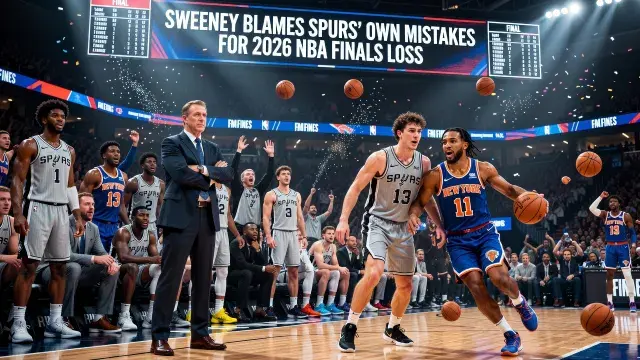
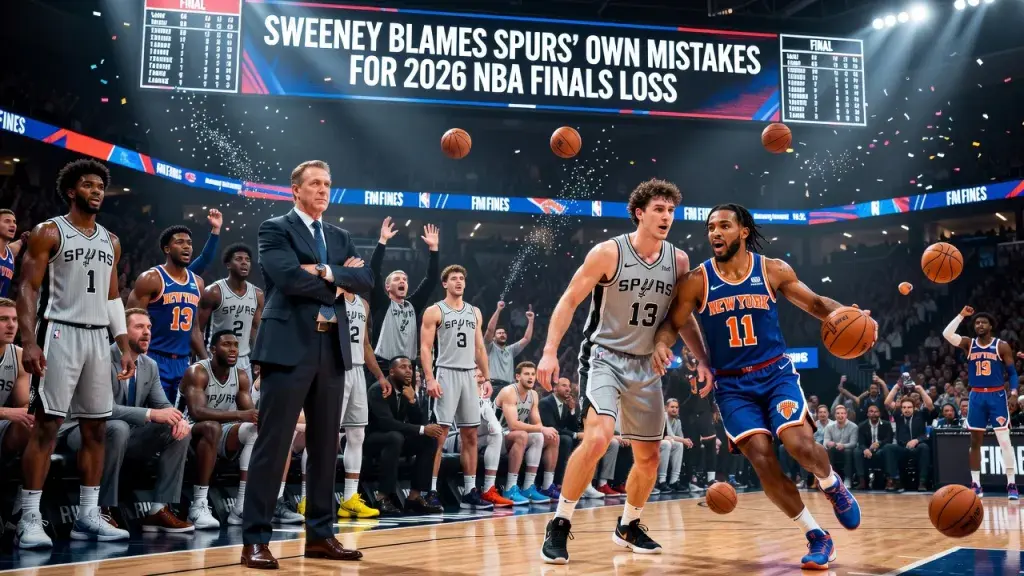
Sean Sweeney, who served as an assistant coach in San Antonio before departing to take the head coaching job at Orlando Magic, has offered a candid dissection of why the Spurs failed to convert a dominant regular Finals performance into a championship. Speaking on The Ryen Russillo Show, Sweeney made clear that the Knicks did not outclass San Antonio so much as San Antonio let the series slip away from within.
It was a summer that packed an extraordinary amount of event into a short window - from major sporting climaxes to blockbuster entertainment releases, with cultural moments arriving in quick succession much like gta 6 and other flagship launches crowding the calendar. The NBA Finals landed squarely in that noise, and Sweeney suggested the spotlight itself played a role. "The one thing I think that's a little different in the finals than the other rounds is when you have to do media in the finals, you have to answer questions even when you've played poorly or struggled," he said. "And you don't have to do that in previous rounds." For a young San Antonio roster experiencing the Finals stage for the first time, that added media scrutiny was, in Sweeney's view, a meaningful off-court variable.
A Physically Drained Team Running Out of Road
San Antonio arrived at the NBA Finals carrying the weight of a gruelling seven-game Western Conference Finals against the Oklahoma City Thunder. Sweeney pointed to that accumulated toll as a primary factor. "I think there's a little attrition having to go through the previous series," he said. He also invoked a striking statistical argument passed on by those inside the organisation: "They told me if the games were like 46 minutes or whatever, we would've won 4-1." The implication is blunt - the Spurs were the better team for the vast majority of each contest, but their inability to protect leads in the final minutes proved fatal, and tired legs in clutch moments were at least partly responsible.
The numbers back the general picture, even if the outcome did not. San Antonio led every single game in the series by double figures, yet failed to close out four of the five contests. That pattern points less to tactical deficiency and more to late-game execution breakdown - precisely the kind of error that tends to compound under physical fatigue and heightened pressure.
Errors, Not Youth, Undid San Antonio
Sweeney was careful to resist the easy narrative that the Spurs simply buckled under Finals pressure because of inexperience. His framing was more precise: the team made errors in the championship round that it had not been making throughout the earlier playoff run. "I think we just made more mistakes than we had made in the previous series," he said. "You can maybe say something to that, but you don't do what you did, and then all of a sudden become young." It is a meaningful distinction. Sweeney is not dismissing the youth of the roster as irrelevant, but he is pushing back against any suggestion that immaturity was the root cause - arguing instead that the collapses were situational rather than structural.
Brunson's Defining Moment Seals New York's 53-Year Wait
Whatever the internal causes within San Antonio's camp, Jalen Brunson provided the decisive individual moment of the series. The Knicks guard delivered a franchise-record 43-point performance in Game Five to clinch New York's first NBA title in 53 years. Sweeney, who coached Brunson during his time in Dallas, allowed himself a moment of wry acknowledgement. "Coached him in Dallas. Happy for him - kind of." The loaded qualifier said everything. Brunson's performance in the decisive game was the kind that defines careers and ends droughts, and it capped a remarkable series comeback story for a Knicks franchise that had waited more than half a century for this moment. For San Antonio, the near-miss will fuel the next chapter - a young team now knowing precisely what the Finals demand, and what it costs to arrive there anything less than whole.