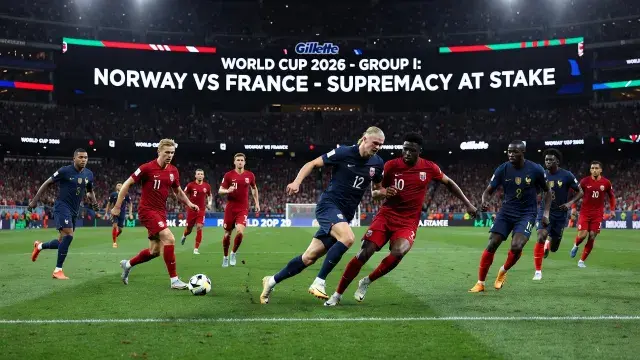
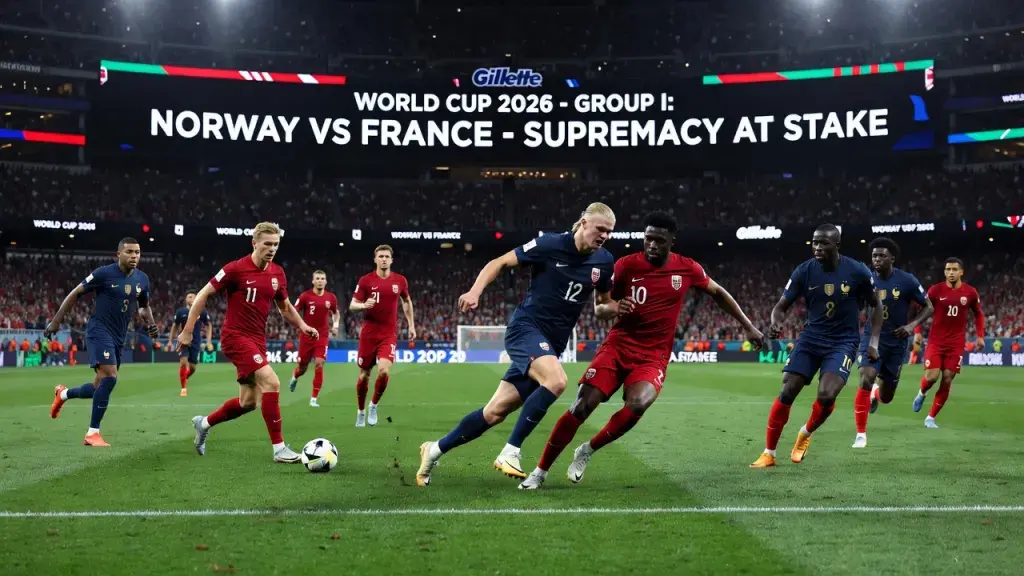
Both Norway and France have already booked their places in the round of 32, but their World Cup 2026 Group I finale at Gillette Stadium carries genuine weight. The two sides are level on six points, with France holding the superior goal difference, meaning the result will determine who enters the knockout draw from the more advantageous top-of-group position - and, potentially, who faces a kinder path through the last 32.
The stakes are real enough that neither side can afford to approach this as a dead rubber, even if the specifics of squad management will inevitably factor in for Didier Deschamps. For a Norway team returning to the World Cup for the first time in 28 years, finishing above France would be a landmark statement that extends well beyond the group stage. The competitive world of sport is full of such inflection points - much like how speedway online betting draws sharp attention precisely when the margins between competitors are at their narrowest - and this match is one where the gap in resources and history between the two nations makes Norway's ambition all the more striking.
Ståle Solbakken's side have been the tournament's most eye-catching story through two matchdays. Erling Haaland has scored four goals across victories over Iraq and Senegal, and Norway's approach - direct, physical, high-tempo - has caused real problems for both opponents. Martin Odegaard has controlled the midfield with the authority of a captain who understands exactly what this moment means for Norwegian football. The confidence within the camp is genuine, not manufactured.
France Composed and Clinical, But Rotation Adds an Element of Doubt
France have been efficient rather than spectacular. Deschamps' side scored three times against both Senegal and Iraq while conceding just once across the two fixtures, suggesting a defensive structure that is considerably tighter than Norway's. Les Bleus have the depth to absorb rotation without dropping below the level required to win this match, but the extent of squad management Deschamps employs will shape the contest's early tempo. Kylian Mbappe is expected to start - the significance of group position justifies it - while questions remain over the workloads of N'Golo Kante and Aurelien Tchouameni heading into the knockout rounds.
The predicted starting lineups reflect the balance both managers must strike. Norway are expected to line up with Nyland in goal behind a back four of Holmgren Pedersen, Ajer, Ostigard and Bjorkan, with Berge, Odegaard and Thorstvedt in midfield and Nusa, Haaland and Schjelderup leading the attack. France should field Maignan; Kounde, Upamecano, Saliba, Theo Hernandez; Tchouameni, Kante, Rabiot; Dembele, Mbappe, Barcola. Both lineups are provisional and subject to late changes.
Haaland vs Saliba and Upamecano: The Duel That Will Define the Match
The central confrontation is clear. Haaland, with four World Cup goals already to his name at this tournament, will run directly at William Saliba and Dayot Upamecano, two of the most respected centre-backs in European club football. Neither Iraq nor Senegal could offer the combination of physical presence, movement and instinctive finishing that Haaland brings inside the box. The question is not whether he will test them - he will - but whether France's defensive organisation as a unit can contain the threat he poses, particularly when Norway push their wing-backs high and create space in behind for runners to exploit.
Equally, Norway's defensive line will have to contend with Mbappe's movement on the left and Ousmane Dembele's directness on the right. Norway's full-backs have been solid but not tested at this level. France's ability to exploit the wide channels while drawing Norway's shape out of position could be decisive, especially if Les Bleus can strike early and force Solbakken's side to open up.
History Leans France's Way, But Norway's Resurgence Commands Respect
Across 16 all-time meetings, France have won eight times to Norway's four, with four draws. The most recent match between the sides, a friendly in Paris in May 2014, ended 4-0 to France. The historical weight of evidence is consistent: when the quality gap narrows, France tend to find a way. Norway did beat France 2-1 in a 2010 friendly in Oslo and the sides drew 3-3 in 1998, but the trend in meaningful football has pointed firmly toward Les Bleus. Their last competitive encounters came in World Cup qualifying in 1988 and 1989, producing a French home win and a draw in Oslo.
What makes this fixture genuinely interesting is that Norway's current squad, built around arguably the world's best striker and one of its most gifted midfielders, is the strongest the nation has assembled in decades. Solbakken has created a side with identity and clear attacking intent. They will not park deep and hope for a counter - the opening two results confirm as much. Whether that openness plays into France's hands or gives Norway the platform to produce one of the tournament's most significant upsets is a question only 90 minutes at Gillette Stadium can answer.