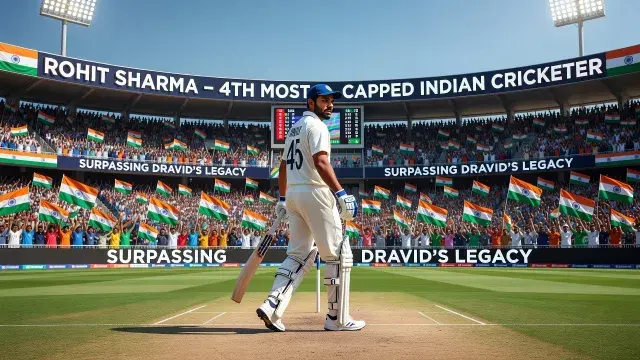
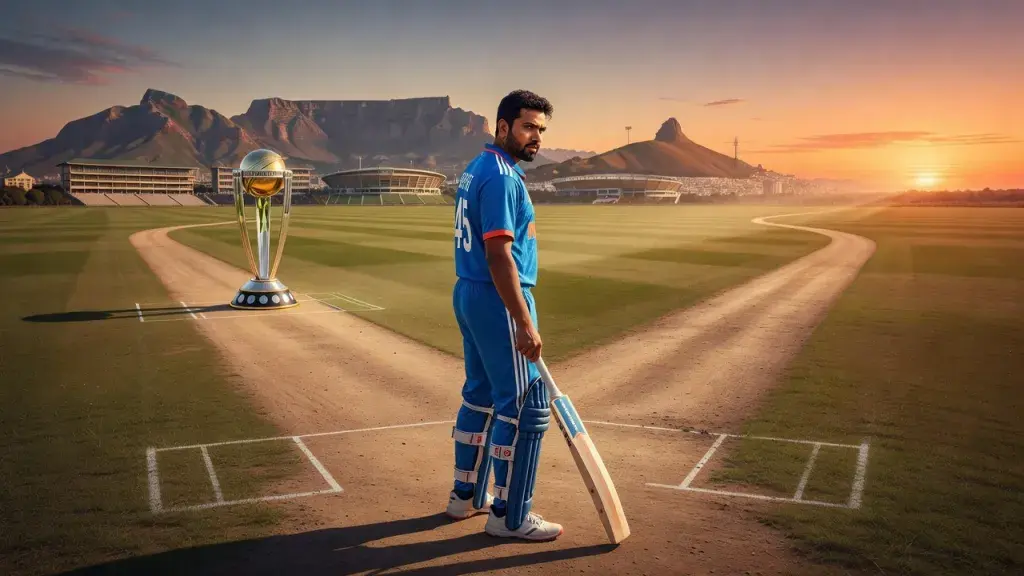
Rohit Sharma's place in India's long-term ODI plans is under genuine scrutiny after a patchy run of form in international cricket and a disrupted IPL 2026 campaign have combined to cast doubt over whether the 39-year-old will feature in the 2027 Cricket World Cup. With the tournament set to be hosted across South Africa, Zimbabwe and Namibia, the BCCI and team management have already begun mapping out their squad for the mega event - and Rohit's name is no longer an automatic entry on that list.
An unverified post circulating on X claimed that the right-handed opener would announce his retirement from international cricket following the third and final ODI against Afghanistan in Chennai, but neither the BCCI nor Rohit himself has made any official statement to that effect. It is worth treating that claim with the scepticism it deserves. What is harder to dismiss, however, is the evidence of the recent months. In the ODI series against New Zealand - a campaign that ended in a historic series defeat for the Men in Blue - Rohit compiled scores of 24, 11 and 16, falling well short of the kind of innings his reputation demands. Sports fans who follow multiple disciplines and track performance metrics across formats, much like those who browse badminton odds across different competitive circuits, understand that sustained inconsistency at the highest level eventually demands a reckoning.
The Afghanistan series offered a fresh opportunity, and the opener began proceedings in Dharamshala with a brisk but brief 16 off 16 deliveries before a costly run-out mixup with captain Shubman Gill brought his innings to an abrupt end. It was precisely the kind of dismissal that invites uncomfortable questions - not about intent, but about communication, awareness and the physical sharpness that separates great players at their peak from great players in decline. Rohit's IPL 2026 campaign for Mumbai Indians further complicated the picture. A hamstring injury sustained during the match against Royal Challengers Bengaluru at the Wankhede Stadium sidelined him for a significant portion of the tournament. Across nine appearances, he scored 283 runs at a strike rate of 157.22 - numbers that tell a story of quality in flashes, but not of the commanding, consistent presence that India need at the top of the order heading into a World Cup cycle.
The Form That Keeps the Door Open
To write Rohit off entirely would be premature and frankly ahistorical. As recently as the ODI series in Australia, he earned the Player of the Series award on the back of scores that included an unbeaten 121 - a reminder that when the conditions suit him and the body cooperates, he remains a destructive force. The series against South Africa yielded two half-centuries in three matches, suggesting that the current lean patch is not a straightforward case of terminal decline. The talent and the big-match temperament are still present; the question is whether they can be sustained across a full tournament campaign nearly two years from now.
World Cup Legacy and the Weight of 2023
Rohit's record in ODI World Cups adds a layer of emotional and historical complexity to this conversation. His 597 runs in the 2023 edition placed him second in the tournament's scoring charts, behind only Virat Kohli's 765. Across all World Cup appearances, his aggregate of 1,575 runs ranks fourth all-time - behind Sachin Tendulkar's 2,278, Kohli's 1,795 and Ricky Ponting's 1,743. He came within touching distance of a World Cup winners' medal in 2023, only for India to fall at the final hurdle. The desire to complete that chapter will not have faded easily for a player of his competitive nature.
Jaiswal Waits, India Decides
The broader context cannot be ignored. Yashasvi Jaiswal has emerged as one of the most exciting top-order talents in world cricket and is already knocking forcefully on the door of the ODI setup. India's management faces a decision that is as much about squad building philosophy as it is about individual merit - do they back an experienced, proven match-winner through a difficult patch, or do they accelerate a transition that now appears inevitable regardless of Rohit's immediate form? The next few international series will likely provide the answer. Rohit, to his credit, has never been a player who needed to be nudged toward the exit; if he believes he can still deliver at that level, he will back himself to prove it. But the margin for further disappointment is growing narrower by the series.